Saturday, January 21, 2012

Purple excrement: a clue!


One of the most intriguing things I learned while researching Charles Darwin (for a children's book I was asked to write called 'Charles Darwin's Big Idea') was the way everything in Nature is interconnected. Life on earth is like a web.

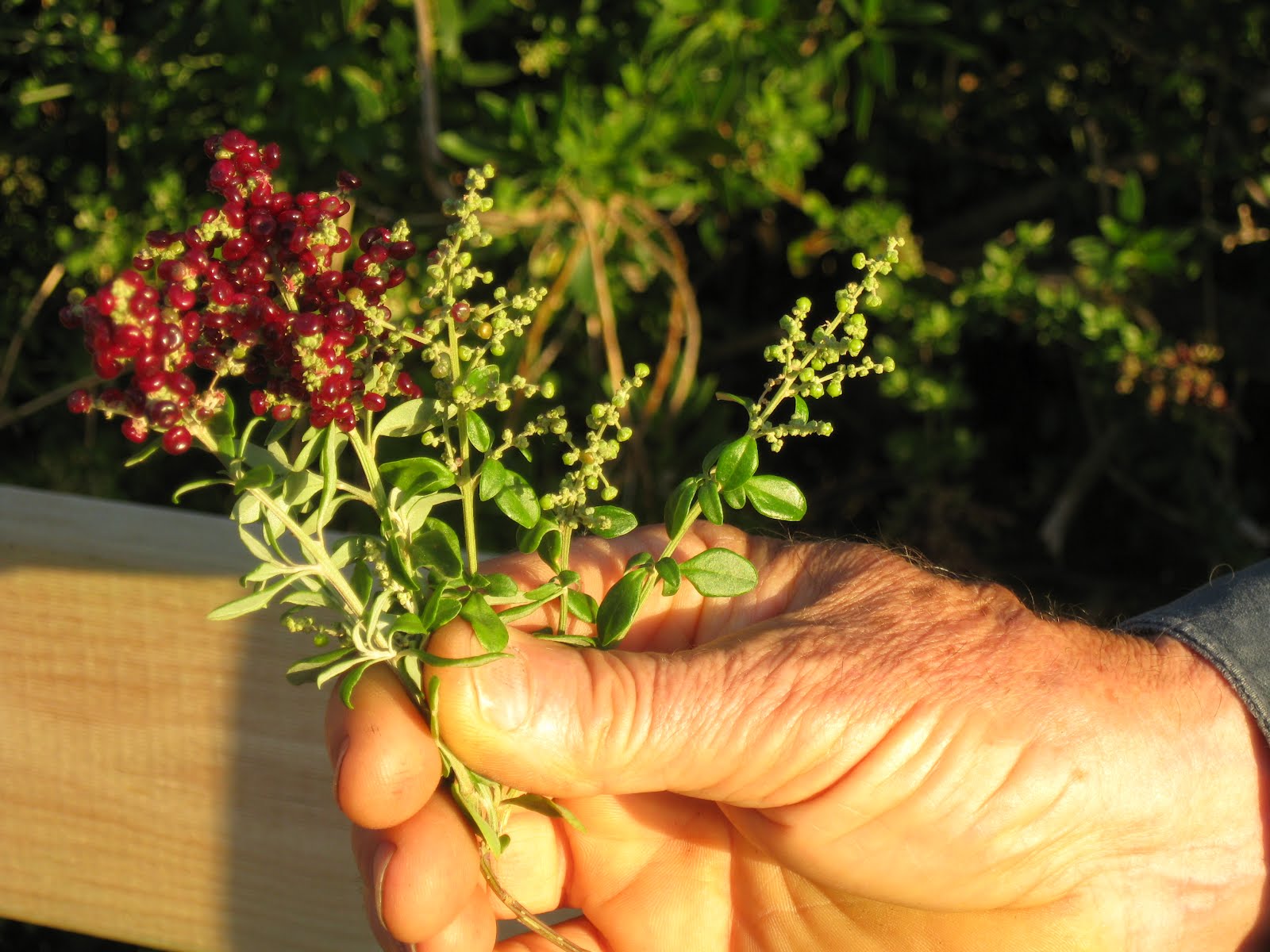
On our walk to the beach I've been noticing that the seaberry saltbush (Rhagodia baccata) is bursting into bright reddish-purple berries, brought on by warmer days. Set against the green-grey of the coastal vegetation, this splash of colour is a welcome sight.

Birds are feasting on the berries, as evidenced by the splashes of purple excrement left on the boardwalk and along the bush track.

PS
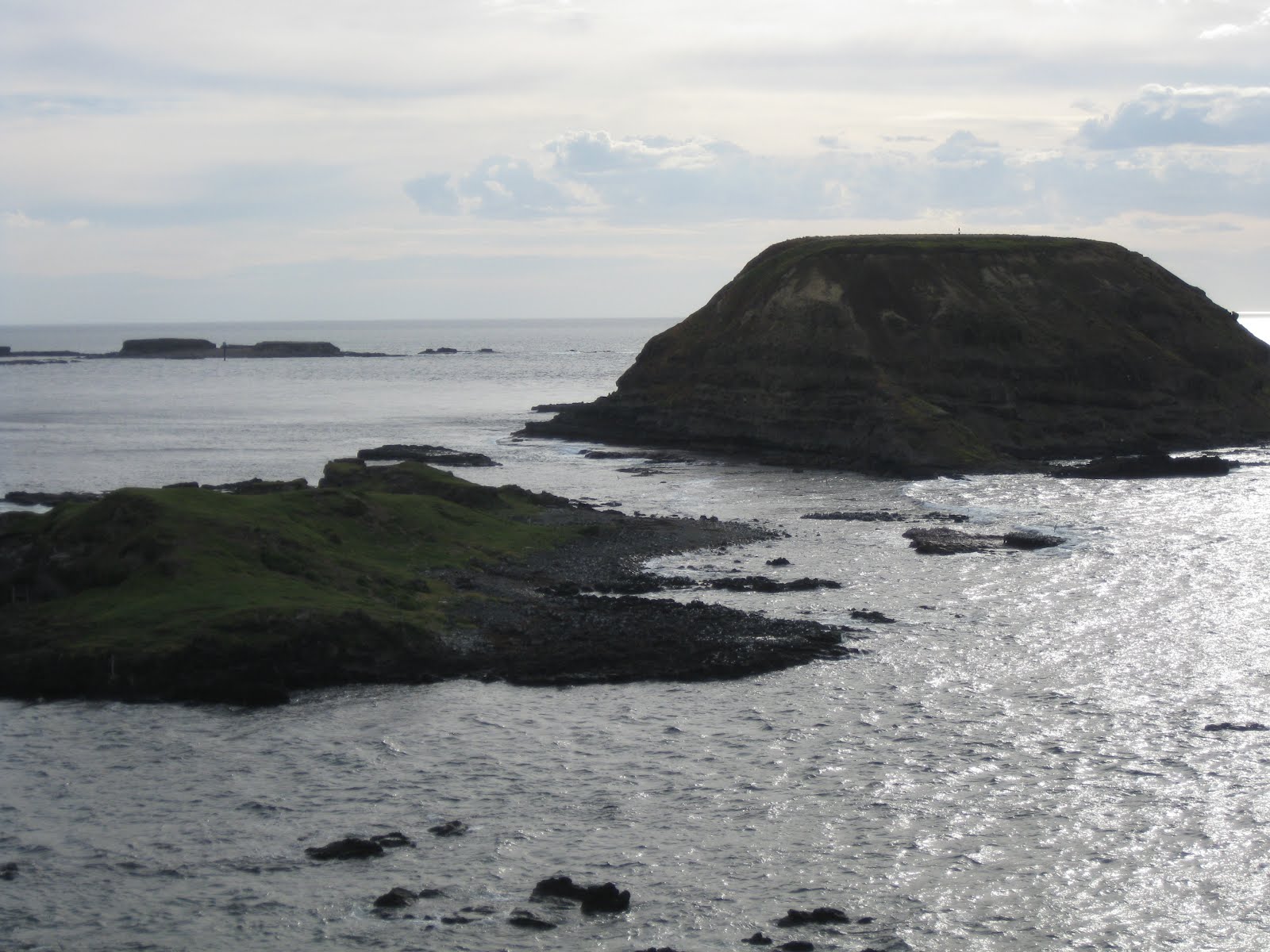
I've included a photo taken from Opal Point, the furthermost part of our daily walk with the dogs. You can see the distinctive hump of The Nobbies, which was the feature of my past two blogs.

Friday, January 20, 2012

Coin-in-the-slot seals: Phillip Island


The afternoon we spent at Point Grant and The Nobbies, we shared with many other people from all around the world. In fact, one could be forgiven for thinking we were in a country other than Australia.

Coin-in-the-slot telescopes, positioned along the Point Grant / Nobbies boardwalk give visitors the opportunity to view more closely, the Australian fur seals that live and breed at Seal Rocks, located to the left (south) of The Nobbies. Alternatively, visitors can take a ferry that offers tours of Seal Rocks, leaving daily from the Cowes jetty.

A modern boardwalk with rails and steps gives about 1 km of easy access to lookouts, and also gives views into the burrows of breeding penguins, mutton birds and seagulls.

You may also see a swamp wallaby nibbling New Zealand spinach, a copperhead snake sunning itself, or Pacific gulls soaring in the wind.

This is a dramatic sea and landscape. No matter what time of day you visit, or the season, there's always something interesting to see -- and the mood is different.

Thursday, January 19, 2012

Nature dramatic at Point Grant and The Nobbies


Point Grant, The Nobbies and Seal Rocks have been described as 'the extended bow of a ship endlessly breasting Bass Strait rollers'.

Situated on the western tip of Phillip Island, Point Grant is the second most popular place for locals and visitors alike. From here, the large hump of rock (about 30 m in height) known as The Nobbies is prominent, with low-lying Seal Rocks located a little to the left (south).

Rounded black boulders of basalt; steep cliffs clothed with tussocks, New Zealand spinach, meadows of pink flowering pigface and pussytail grasses; dramatic waves; rock platforms, pools and caves; a booming blowhole, all these and more make up this dramatic coastline.

One of my photos shows a perfectly round rock pool, created through the action of rocks being tumbled round and round by waves.

Looking down to sea level, it's possible to see steep winding pathways -- splashed with excreta -- created by penguins who tumble out of the waves and then clamber up the cliffs to their burrows. Some burrows are man-made; however, most are natural.

When we visited it was late afternoon, so young penguins in the burrows were anticipating the arrival of their parents at dusk. Every now and then we saw a face peeping out of a burrow.

Tomorrow I'll show you more about this amazing place.

Wednesday, January 18, 2012

Major's exuberance needs more control


While living in Mitchell, Major walked well on a loose lead; a walk along the Maranoa River to the bridge and back.

But now, on Phillip Island, he's regressed to pulling badly on the lead, completely over-riding his haltie-lead. The problem is his exuberant nature and his impatience to get to the sea and go for a swim.

So, back to square one and clicker training in the house and yard -- and then continue the training on his walk too, of course.

Going down the steps of the boardwalk to the sea needs the most attention. Consequently, we've begun a Click, Sit and tiny food reward routine to begin and end each set of steps -- and slowness while descending and ascending.

Major is very intelligent and wants to please, but he's also a dominant, strong willed dog. Sometimes I think we'll never get there!

But then I look at the way Del (five years old) walks on a loose lead attached to her collar, and I remember that she was MUCH worse at Major's age.

At two years of age Major's a teenager who is pushing the limits and who's full of exuberant anticipation for the fun he's soon to have -- running free on the beach and swimming.

What a life!

Tuesday, January 17, 2012

Building sandcastles: Phillip Island


There's something about building a sand castle on the seashore that incredibly relaxing.

Scooping up handfuls of clean golden sand, letting the grains trickle down through your fingers -- digging, patting and smoothing sand to build all matter of creations; all are satisfying, no matter what your age.

A volcano, complete with crater and lava flow; a mediaeval castle with shell windows and doors, a moat and seaweed gardens -- -- --; or a fort built to withstand the incoming tide.

And then the tide comes in and all are washed away. Tomorrow is a fresh canvas on which to create new dreams.

Monday, January 16, 2012

The birthday of 23 million mutton birds


Every year, around January 15, Australia's 23 million short-tailed shearwaters (mutton birds) hatch their eggs. It's the birthday of tiny chicks covered in grey down. Although the date varies by a couple of days either side of January 15, this is the day when most of the mutton bird eggs hatch; eggs that were laid around November 25.

It's an exciting time in the rookery. The birds are extra noisy as they 'talk' about the hatching and 'discuss' feeding rosters.

From now until maturity in late April, the mutton bird chicks will eat enormous quantities of krill and small fish, delivered to the burrow by the returning parents.

For the first week or so one parent will stay with the chick to keep it warm and safe, while the other goes out fishing -- either in Western Port Bay or Bass Strait.

In our Ventnor rookery we have about 2000 birds. This is one of the smaller rookeries on Phillip Island. Swan Lake also has a rookery. On Cape Woolamai (also on Phillip Island) the mutton bird colony has about three quarters of a million birds. Phillip Island has about 1 1/2 million birds in total; with the Australian population of mutton birds about 23 million.

When we lived on King Island, our property had both mutton bird and penguin rookeries. It was here that I first became interested in these birds and began studying their habits -- and writing about them. One of the first books I wrote was called Moonbird. Written for children aged between eight and 12 years, the book was fiction, based on King Island with a strong mutton bird connection. The book is in many libraries throughout Australia.

Now on Phillip Island we live alongside another mutton bird rookery, so my study and interest continues. I never cease to be amazed by their life cycle and breeding patterns. Therefore, today I celebrate the birthday of all the mutton bird chicks newly hatched and living in sandy burrows on islands in southern Australia -- but especially in Bass Strait.