Showing posts with label Little penguins. Show all posts

Wednesday, April 4, 2012

Decapitated penguin suggests fox attack


Although gruesome, this decapitated penguin -- found tangled in seaweed on 'our' beach -- suggests the work of a fox and brings to mind the excellent work done by the Phillip Island Nature Park Rangers in reducing the number of foxes on the island. It's estimated that between 20 to 30 foxes remain.

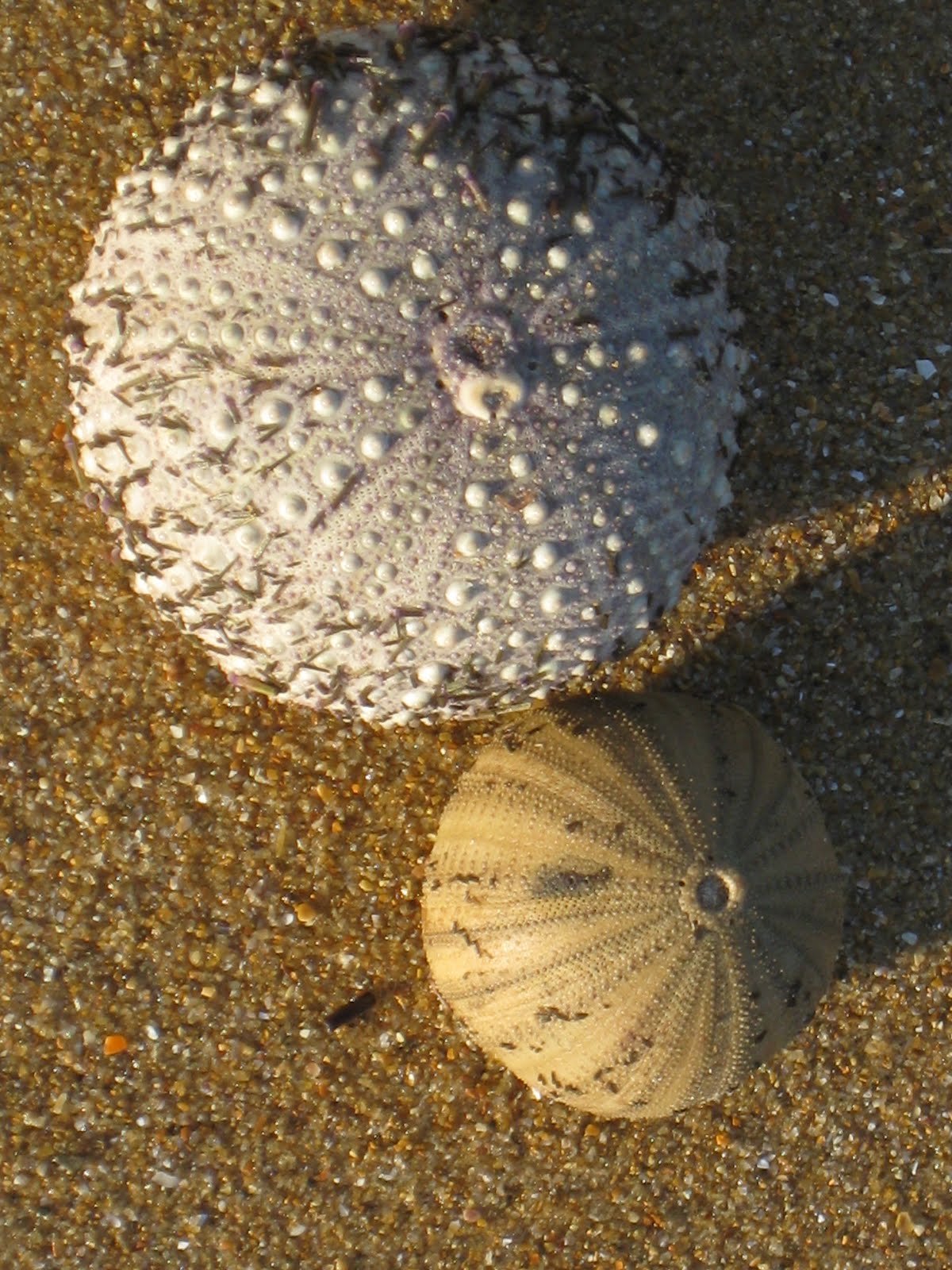
Other finds today included a crab, an elephant shark egg case and a couple of sea urchins (affectionately referred to as sea eggs by islanders).

Wednesday, February 29, 2012

Heat-affected penguins in refrigerators: Phillip Island


Yesterday we shared a pot of tea with Peter Dann, a marine biologist who's been working with Little penguins for all of his working life -- and who we first met in 1981, on King Island. Whenever we meet up with Peter, even after an interval of several years, it's as if we've seen him yesterday. He's wonderful company and has a vast knowledge for all things natural.

Peter amused us by telling of a recent incident at the Phillip Island Nature Park Animal Hospital, where they were treating penguins suffering heat-stroke. All that was required was to put the penguins in a refrigerator for a few minutes, and then tube feed them fluids. It reminded me of occasions when we had sheep with lambs suffering from exposure to icy winds. We simply put the lambs in an oven for five to 10 minutes, tube fed them milk -- and they revived magically.

Every now and then a dead penguin is washed ashore on Phillip Island and we always check it for either a tag on its flipper or a microchip on its back.

The microchips used on penguins are the same as those used on pet dogs and cats. Peter Dann and other marine biologists have been studying the movements and life cycle of Little Penguins (commonly called fairy penguins) for well over 30 years, and these microchips and tags have helped in the gathering of information.

When we lived and farmed on King Island in the 1980s, we were involved with the banding of penguins on our coastline. One of the penguins we banded on King Island, Peter Dann picked up on Phillip Island one year later. And then we found that same penguin dead in our King Island rookery a couple of years further down the track.

Bass Strait is a turbulent stretch of water and it's surprising to find that penguins move so freely between islands, with some venturing as far south as southern Tasmania.

There is nothing quite as delightful as watching penguins tumble out of the waves at sundown, and to see them waddle up the beach in their quaint little dinner suits, to be met at the entrance to their burrows by hungry trilling chicks.

Sunday, January 22, 2012

Linking foxes, penguins, mutton birds & geese


The Phillip Island Nature Park does a great job of eradicating foxes from Phillip Island. At last estimate, the number left on the island was between 10 to 20 foxes.

Foxes are an introduced predator of penguins, mutton birds and Cape Barren geese and as such pose a very real threat to their numbers. A few years ago a fox killed over 60 mutton bird chicks in one night in our Ventnor rookery. It was a dreadful slaughter.

The remaining 10 to 20 foxes are, unfortunately, the most cunning, and as such, are difficult to trap, shoot and bait. However, the Phillip Island Nature Park Rangers are much smarter, so we look forward to the day when that last fox is dead!

The lower fox numbers have had a beneficial effect on the number of Cape Barren geese that reach maturity. Once uncommon, Cape Barren geese are now frequently seen grazing alongside roads and in paddocks where they coexist happily with cattle. Today we saw 36 geese grazing with a herd of Friesian dairy cows. Some of their beaks were stained purple from eating sea berry saltbush berries (see yesterday's blog for more about these berries).

One of the saddest sights I've seen recently was a lone Cape Barren goose standing by his dead mate who'd been killed on the road. Clearly this goose was grieving and I wondered how long he would stay by his dead mate.

Cape Barren geese mate for life: so too do mutton birds.

Sunday, January 15, 2012

Penguin rumours proven correct


Rumours have been circulating in our neighbourhood about a family of penguins living on 'our' beach here at Ventnor.

Originally a colony of Little penguins did live here; however, there haven't been any at all in the 15 years we've lived here. So, this is exciting talk!

Yesterday we found the two burrows, very close to the most popular swimming part of the beach. It was the distinctive smell that I noticed first, then the footprints and the occasional feather.

To date we haven't seen the penguins (several other people have) but we'll make a point of going down to the beach after sundown tonight.

I'll keep you posted.

PS
Because of the timid nature of penguins, I will not attempt to take photos of them. It's very important that penguins are not disturbed on their journey from the sea, up the beach and into their burrows. My photos of penguins were taken inside the Phillip Island Penguin Parade Centre, from educational displays. The burrows are the real ones though.

Monday, December 12, 2011

People housing to penguin housing: Phillip Island


The Little penguins on Phillip Island provide Victoria with one of its most popular tourist attractions, with the penguins attracting at least 500,000 tourists and adding more than $107 million to the state's economy, annually.

Fortunately for the penguins, people recognize their economic value and go to great efforts to preserve this natural asset. One of the things that has happened on the island recently is a large-scale residential property buyback of land within the penguin colony. Private homes have been either pulled down or relocated and in their place, artificial penguin burrows have been built and natural vegetation planted to create a natural habitat attractive to the penguins.

Phillip Island has set aside 20 per cent of its land mass for the penguins.

The Phillip Island Nature Park is dedicated to the conservation and enhancement of the Phillip Island penguin colony through careful management, education and research. Every cent spent at the Penguin Parade assists in its operation and supports Phillip Island's unique wildlife.

There's nothing quite as cute as penguins dressed in their dinner suits, waddling ashore at dusk.