Showing posts with label foxes. Show all posts

Wednesday, April 4, 2012

Decapitated penguin suggests fox attack


Although gruesome, this decapitated penguin -- found tangled in seaweed on 'our' beach -- suggests the work of a fox and brings to mind the excellent work done by the Phillip Island Nature Park Rangers in reducing the number of foxes on the island. It's estimated that between 20 to 30 foxes remain.

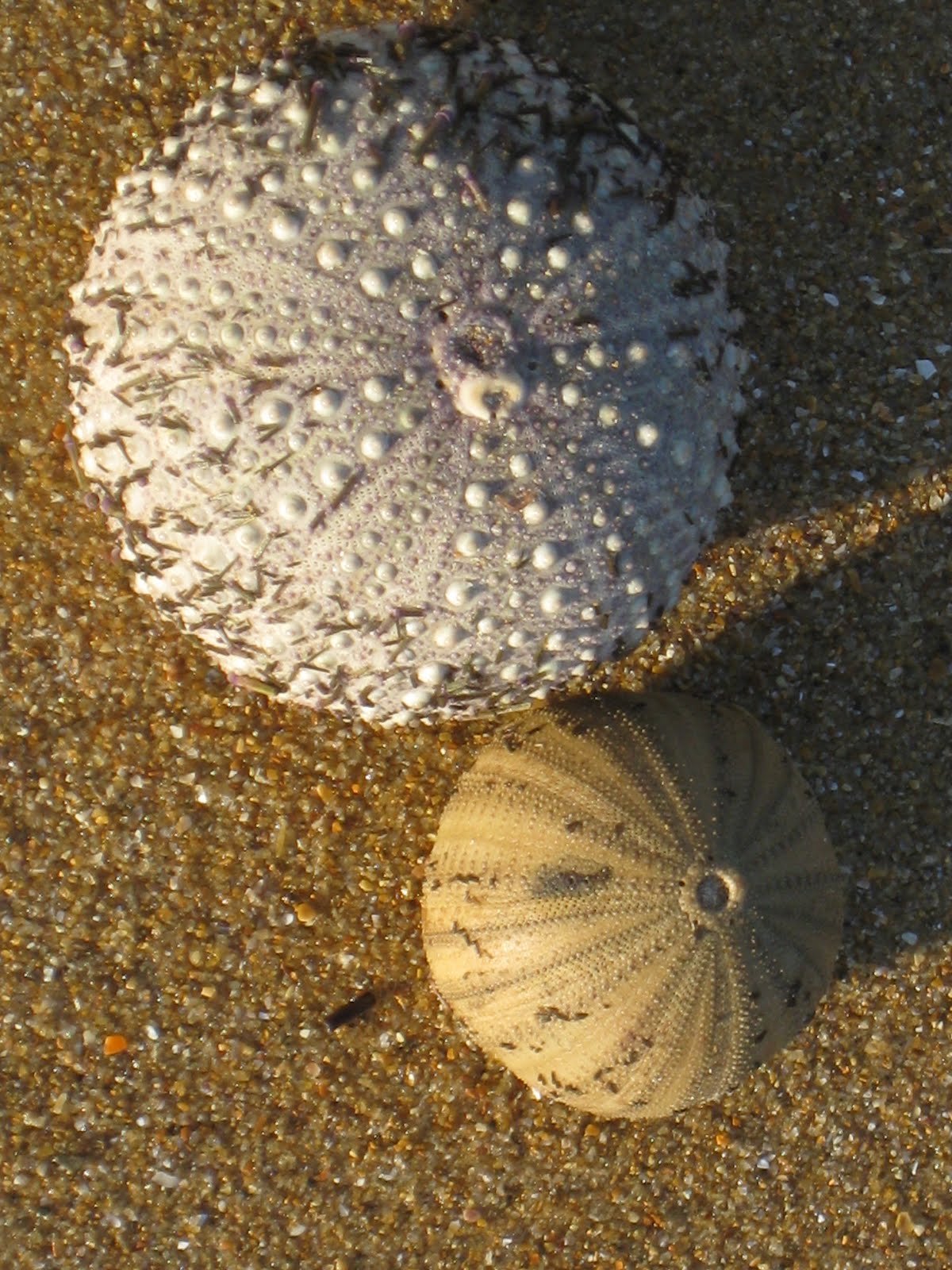
Other finds today included a crab, an elephant shark egg case and a couple of sea urchins (affectionately referred to as sea eggs by islanders).

Sunday, January 22, 2012

Linking foxes, penguins, mutton birds & geese


The Phillip Island Nature Park does a great job of eradicating foxes from Phillip Island. At last estimate, the number left on the island was between 10 to 20 foxes.

Foxes are an introduced predator of penguins, mutton birds and Cape Barren geese and as such pose a very real threat to their numbers. A few years ago a fox killed over 60 mutton bird chicks in one night in our Ventnor rookery. It was a dreadful slaughter.

The remaining 10 to 20 foxes are, unfortunately, the most cunning, and as such, are difficult to trap, shoot and bait. However, the Phillip Island Nature Park Rangers are much smarter, so we look forward to the day when that last fox is dead!

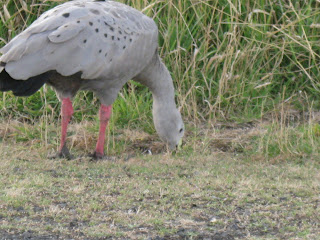
The lower fox numbers have had a beneficial effect on the number of Cape Barren geese that reach maturity. Once uncommon, Cape Barren geese are now frequently seen grazing alongside roads and in paddocks where they coexist happily with cattle. Today we saw 36 geese grazing with a herd of Friesian dairy cows. Some of their beaks were stained purple from eating sea berry saltbush berries (see yesterday's blog for more about these berries).

One of the saddest sights I've seen recently was a lone Cape Barren goose standing by his dead mate who'd been killed on the road. Clearly this goose was grieving and I wondered how long he would stay by his dead mate.

Cape Barren geese mate for life: so too do mutton birds.

Monday, December 12, 2011

Rabbits: the good and the bad


There's something about the long velvety ears of rabbits and the softness of their fur that make them quite irresistible. Yet, in the Australian environment rabbits are a serious pest, and on Phillip Island they're in plague numbers.

While we were living in Mitchell, in outback Queensland, wild rabbits had a lovely time living in our garden. There was nothing to disturb their peace. However, as soon as we let our two German shepherds out of the ute -- on our return to Phillip Island -- rabbits scampered in all directions, with the dogs in hot pursuit.

Here on the island, rabbits tend to live under bushes and buildings rather than dig burrows. Rainfall on the island has been plentiful throughout 2011, resulting in lush green grass and masses of tender shoots on bushes and trees. All this adds up to a rabbit paradise, especially since the Phillip Island Nature Park is serious about fox eradication -- the penguins and rabbits main predator.

Our two dogs have never caught a rabbit, therefore I believe that the rabbits living in our yard are relatively safe. Chasing rabbits is a sport, as far as our dogs are concerned; and from our point of view, rabbit chasing keeps our dogs well exercised. A family of rabbits live underneath an old caravan in our backyard. Major squeals in frustration after chasing a rabbit from the grass to beneath the caravan. He and Del sniff and snort with their noses only centimetres from the rabbits.

As I love all animals, including rabbits, I enjoy seeing them living in and around our garden, and I enjoy watching their interactions. Kitten rabbits are adorable and remind me of a pet rabbit I kept about 15 years ago. She was an English Butterfly rabbit and I called her Blackberry. She was large, and had soft white fur with a black butterfly marking on her face, and black ears.

Blackberry lived inside the house as one of the family, and I trained her to a litter tray. We had Irish setters at the time and she became close friends with them. She was one of the most lovable animal friends I've ever had -- placid, playful and affectionate. The only problem I had with Blackberry was that she chewed electrical cords and furniture. I solved this problem by covering some of the cords and providing pieces of bark covered wood for her to gnaw on.